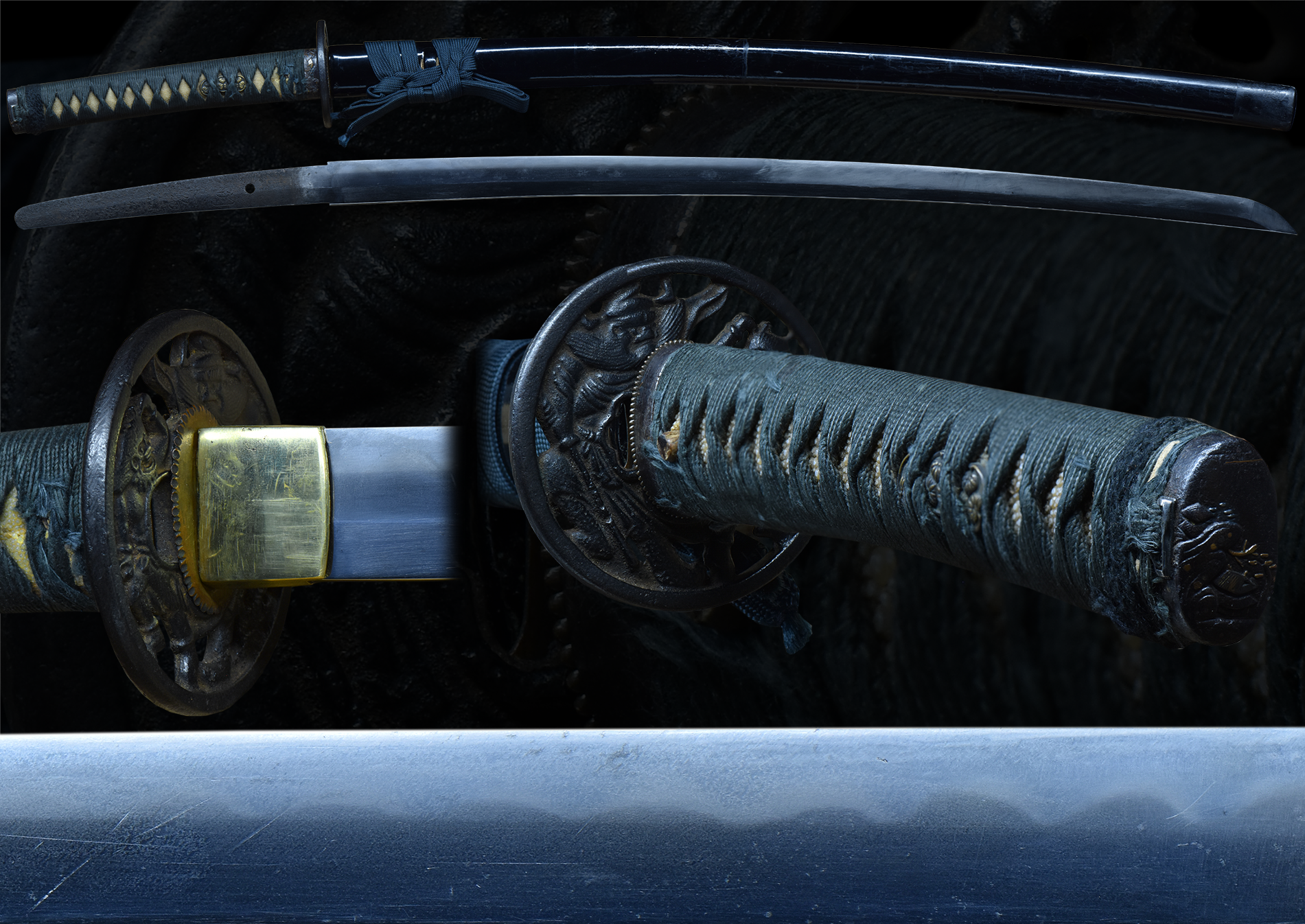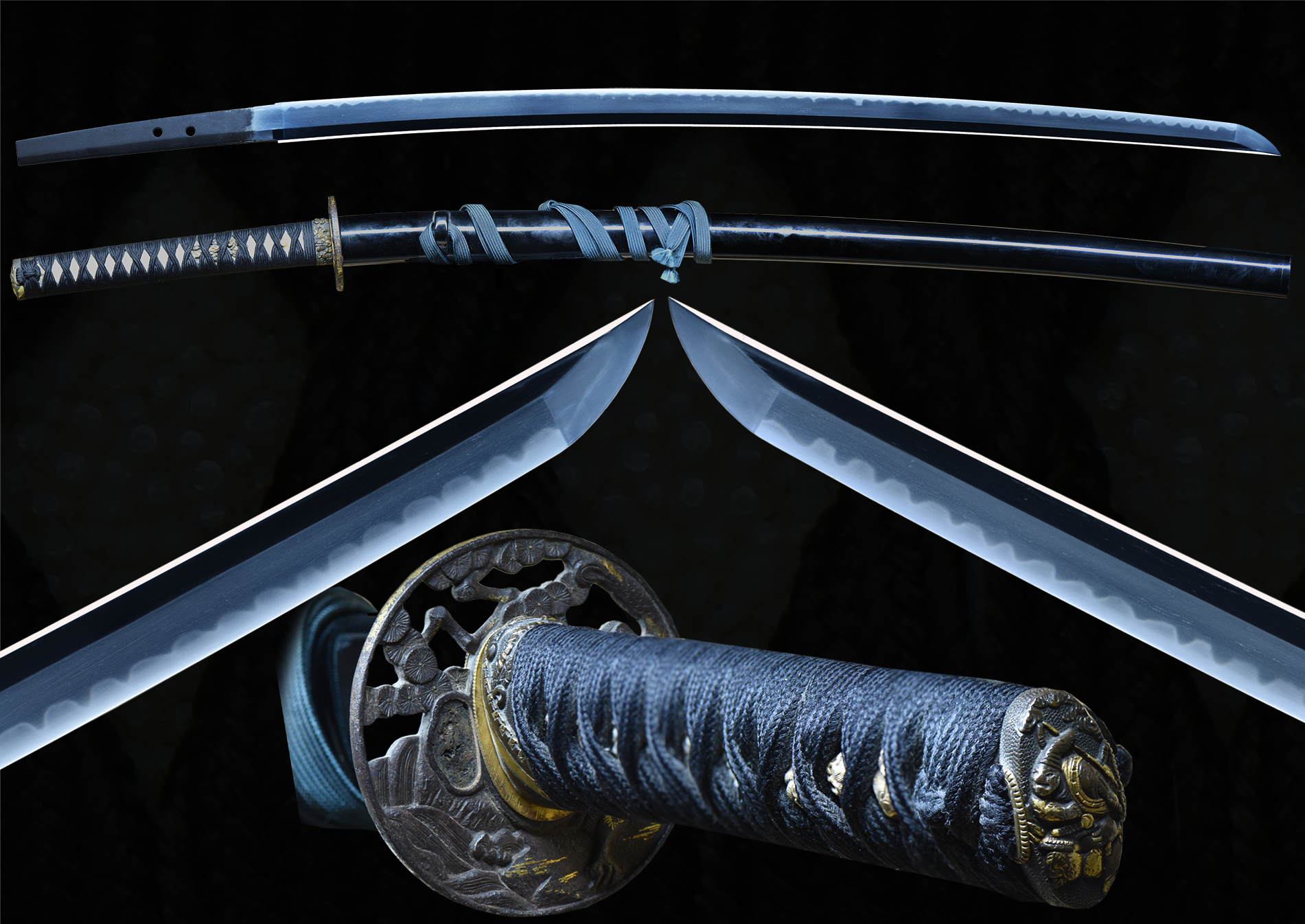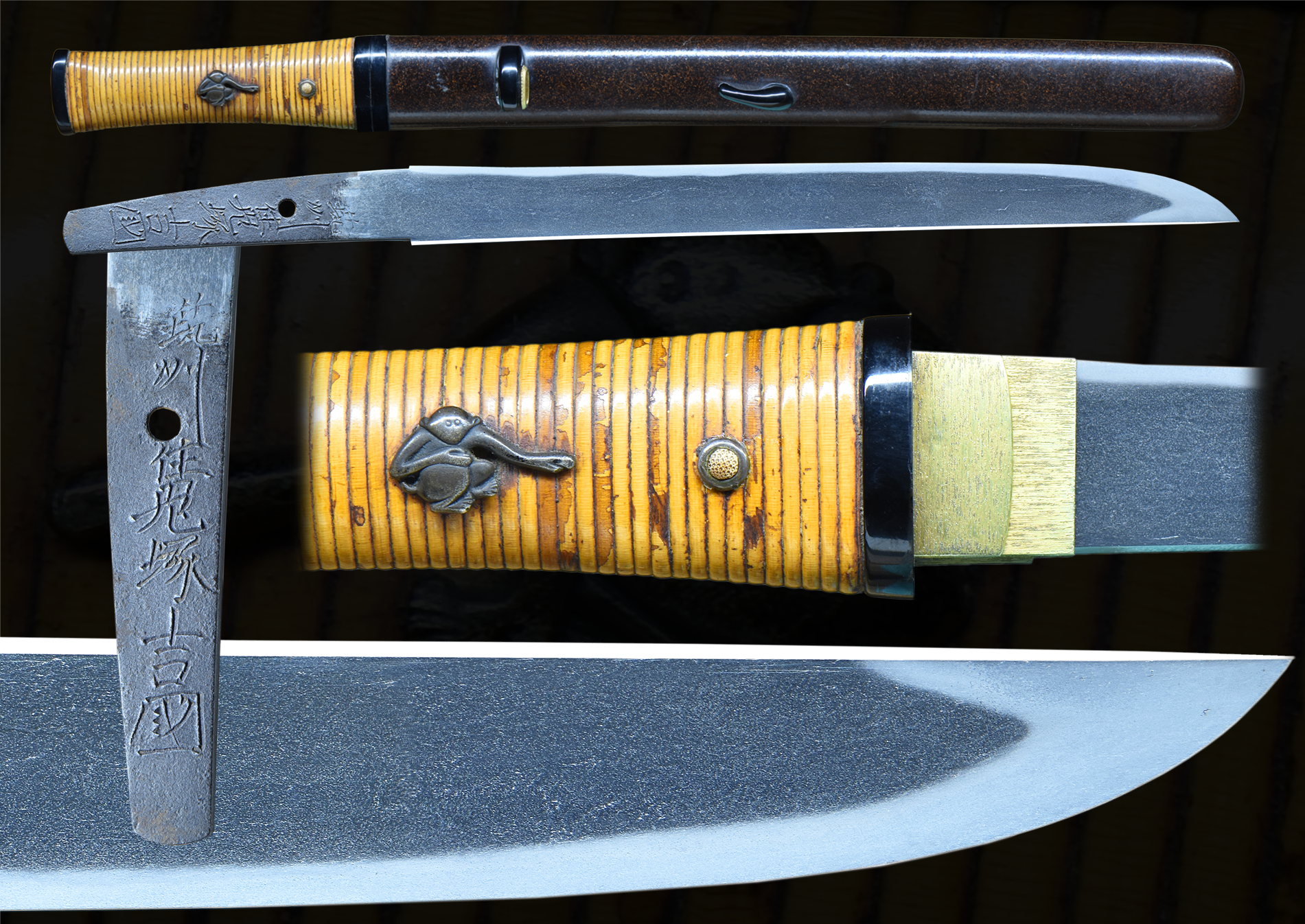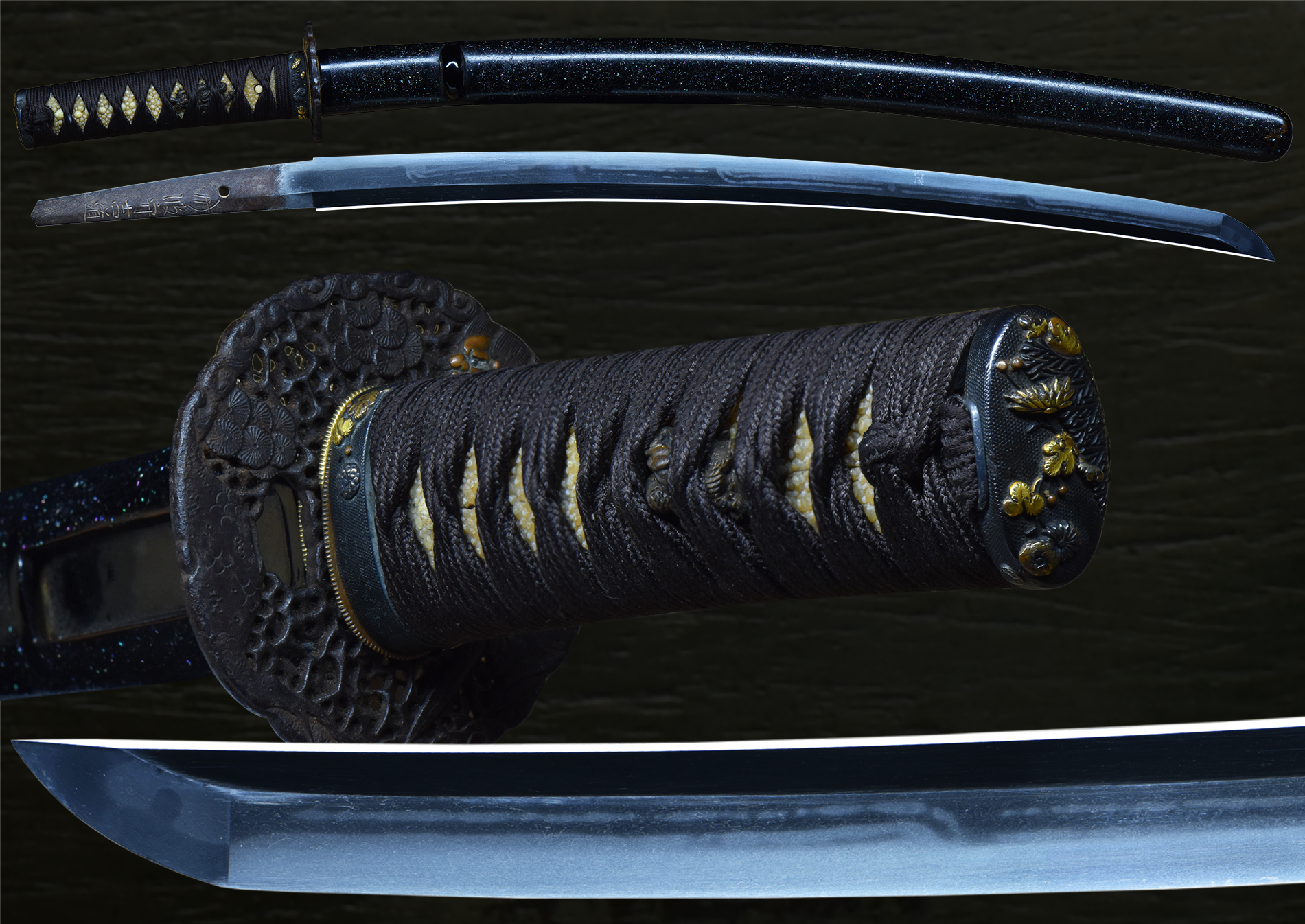
Katana by Ōmi no Kami Hōjōji Tachibana Masahiro (近江守法城寺橘正弘)
With Edo-period Koshirae – NTHK Kanteisho
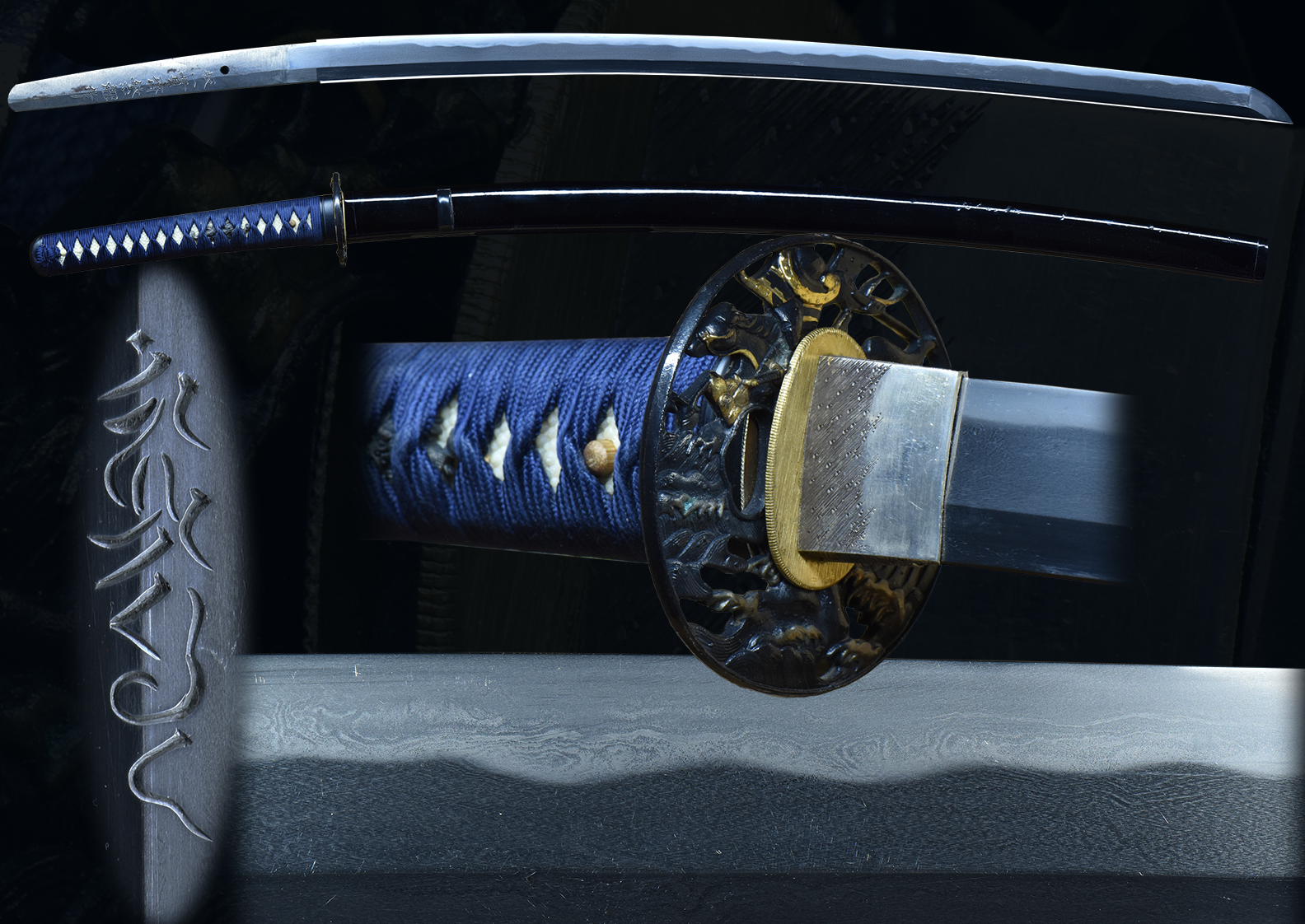
This katana is signed “Ōmi no Kami Hōjōji Tachibana Masahiro” (近江守法城寺橘正弘), a prominent member of the Hōjōji school working in Edo during the Kanbun–Enpō era (1661–1680). The Hōjōji group is renowned for precise forging and dignified sugata, and Masahiro himself was honored with the title Ōmi no Kami, an Imperial court rank reflecting his recognized skill and reputation.
The Blade
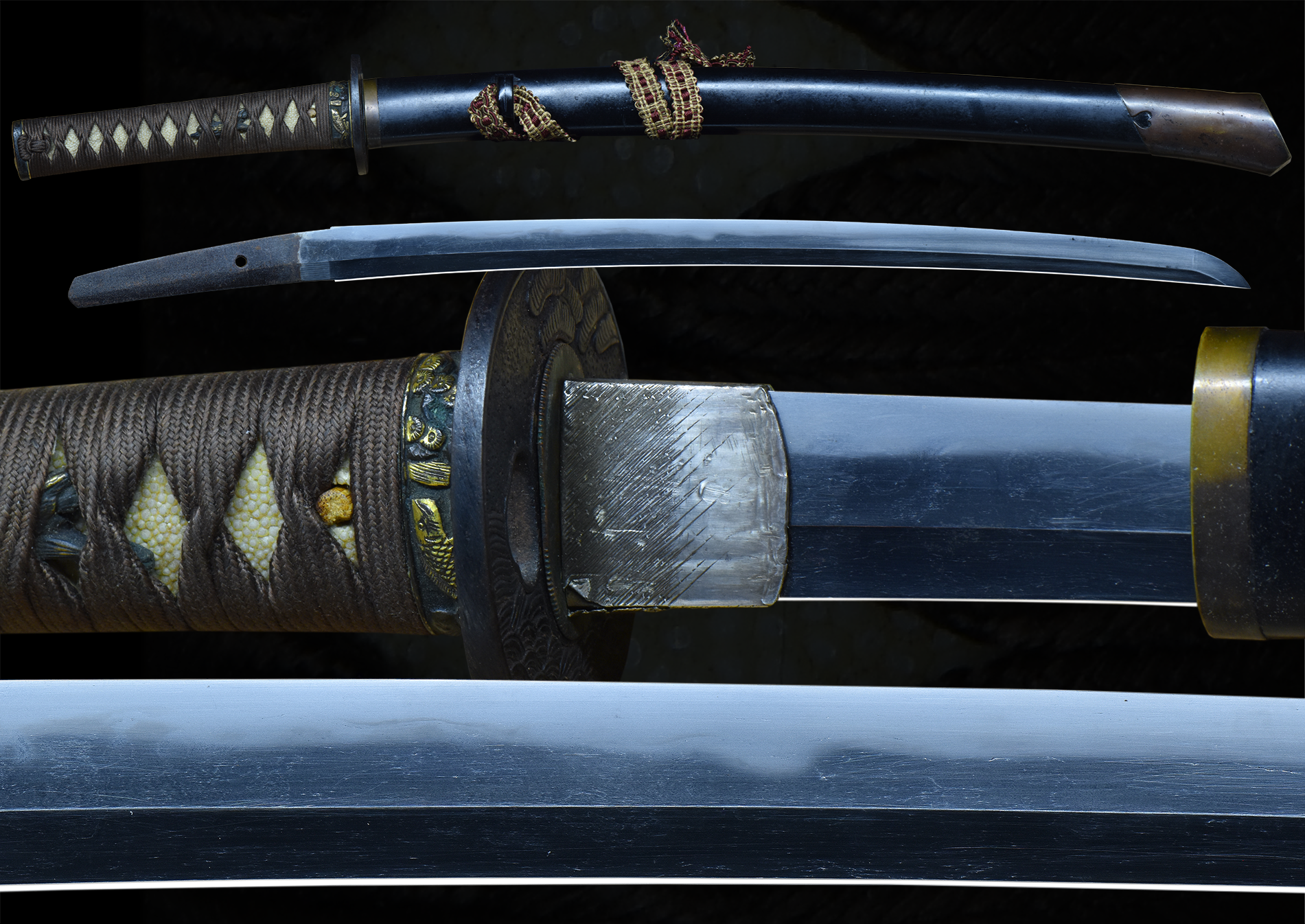
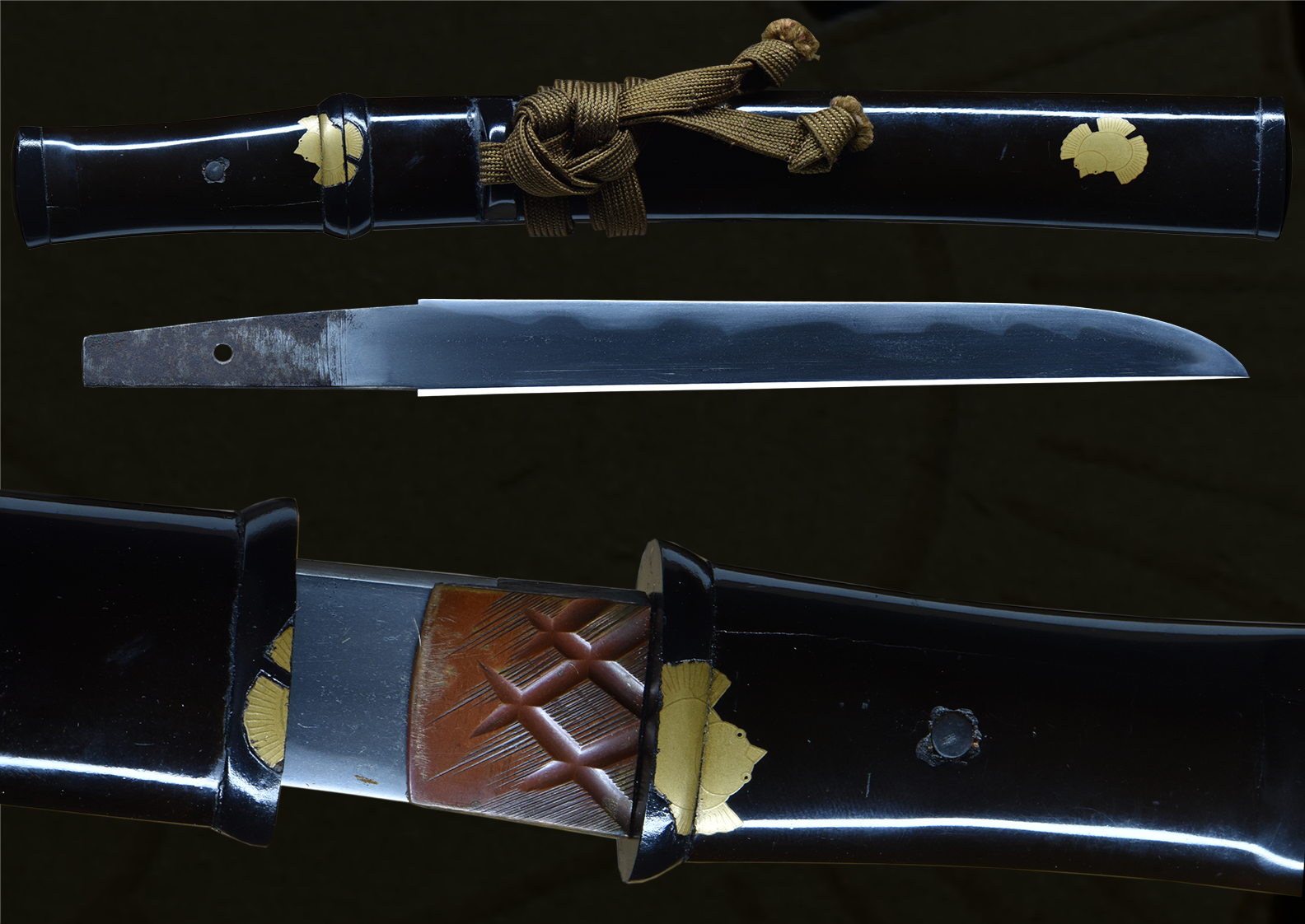
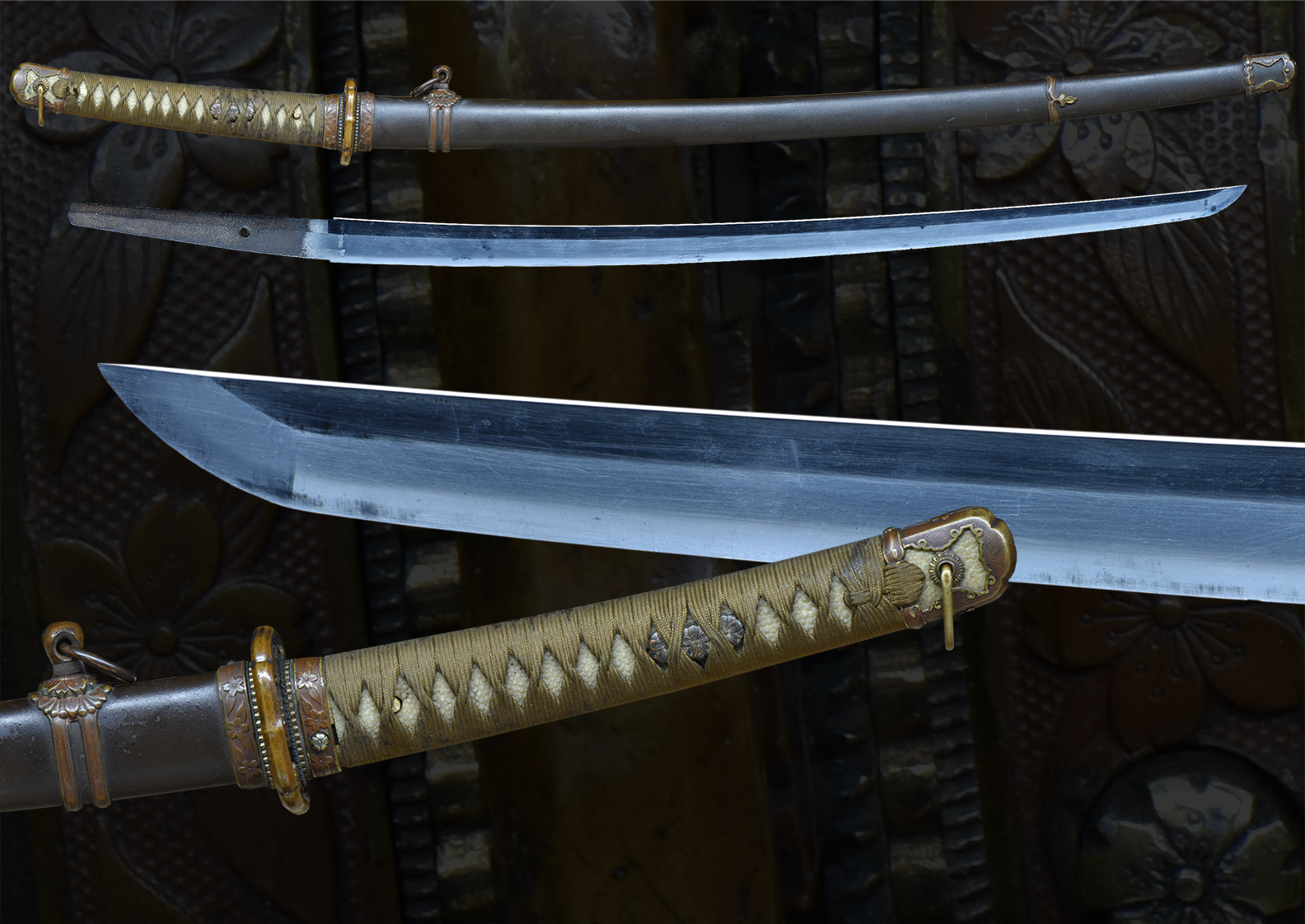
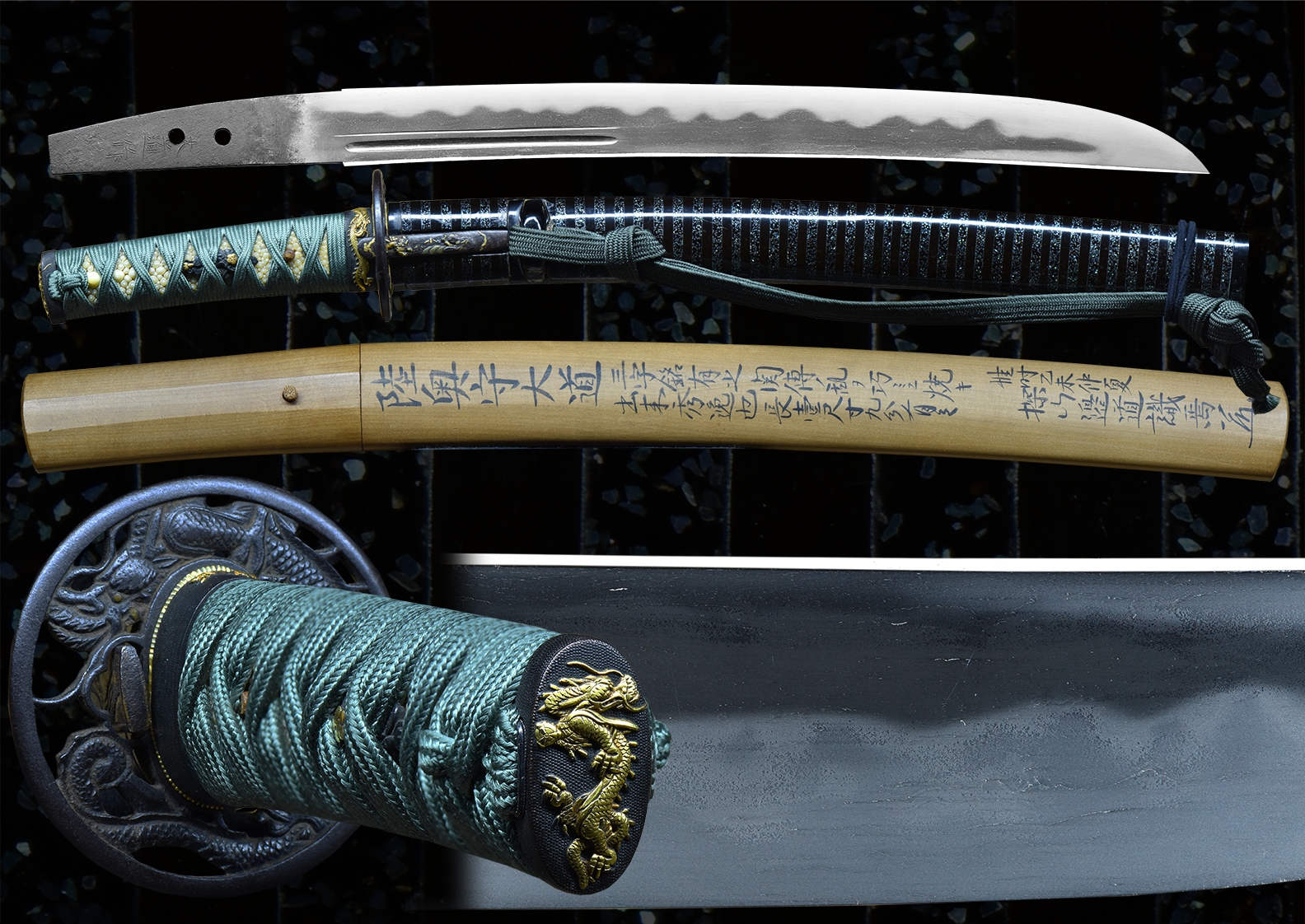
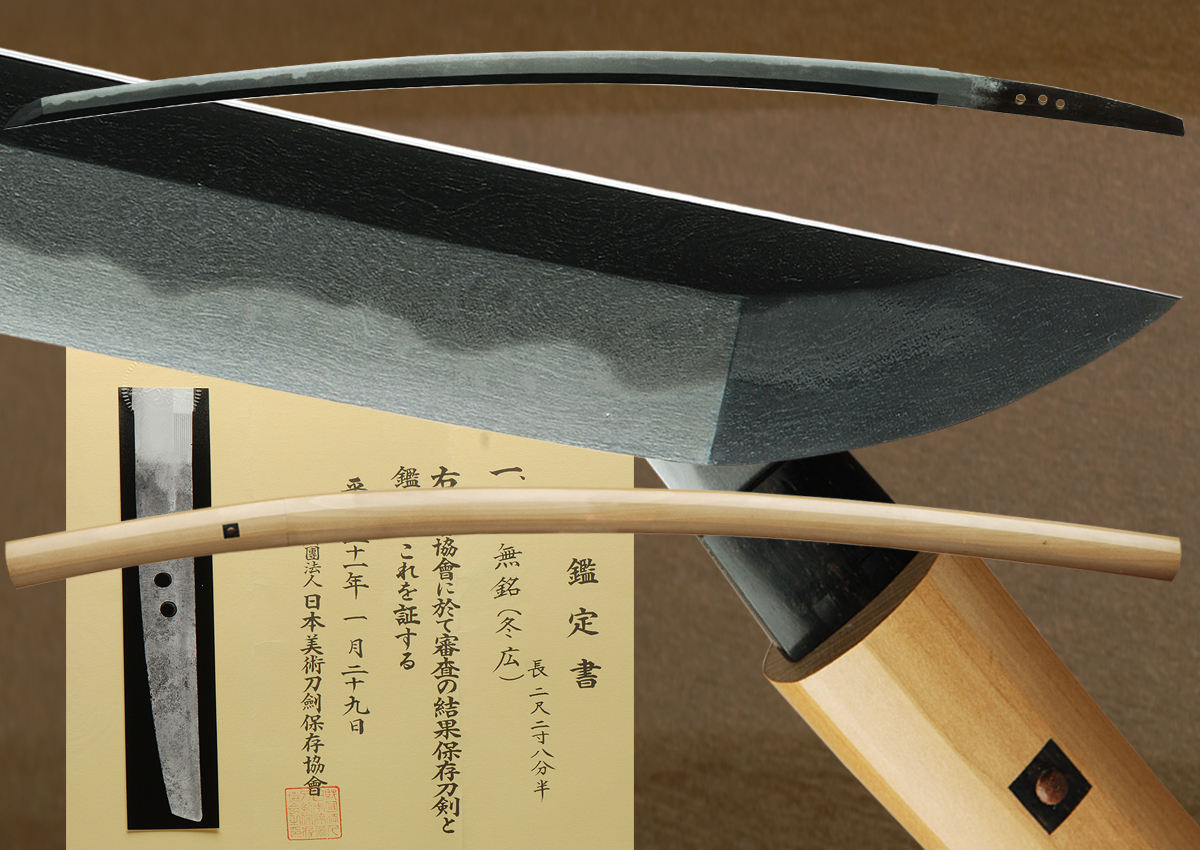
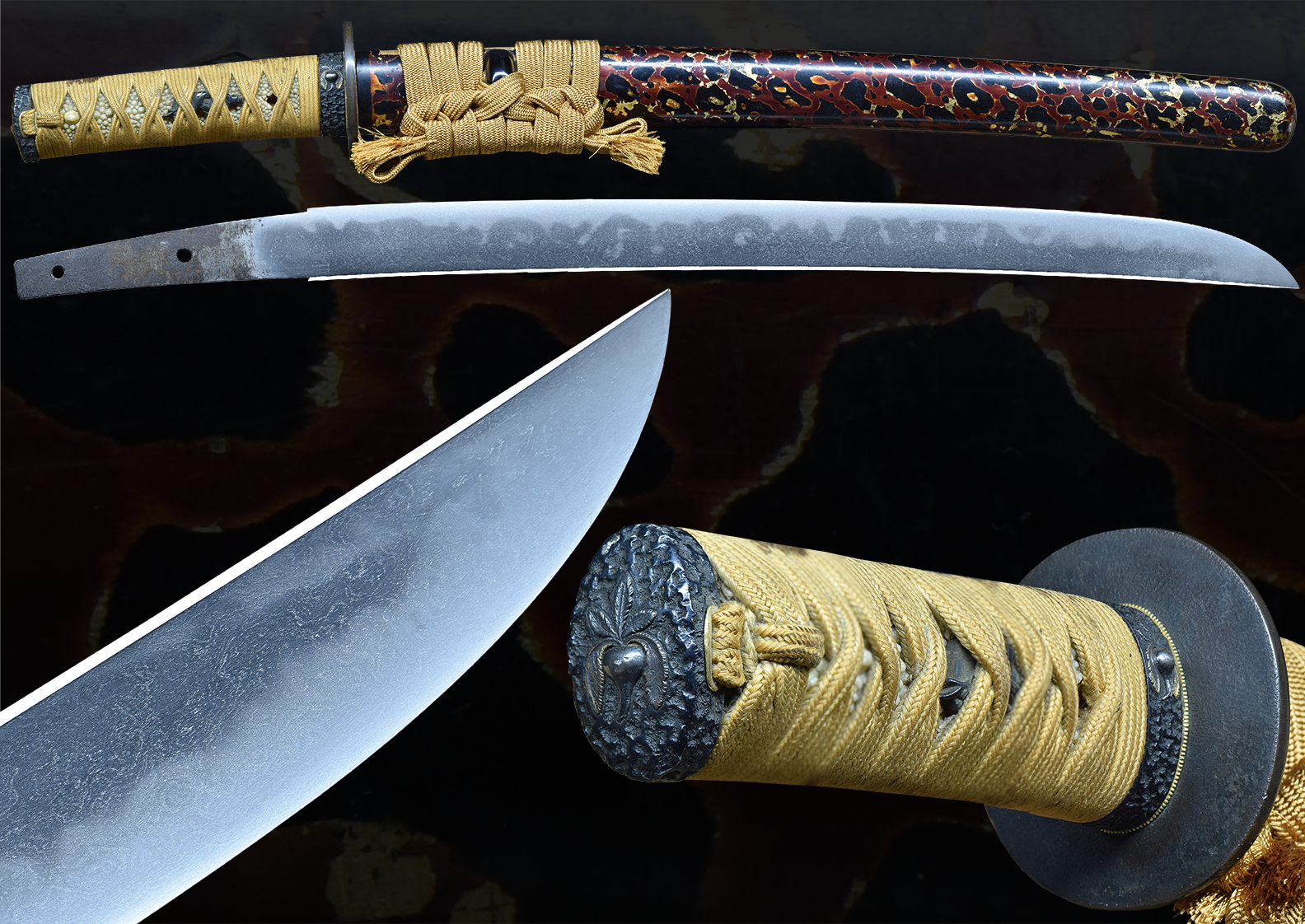
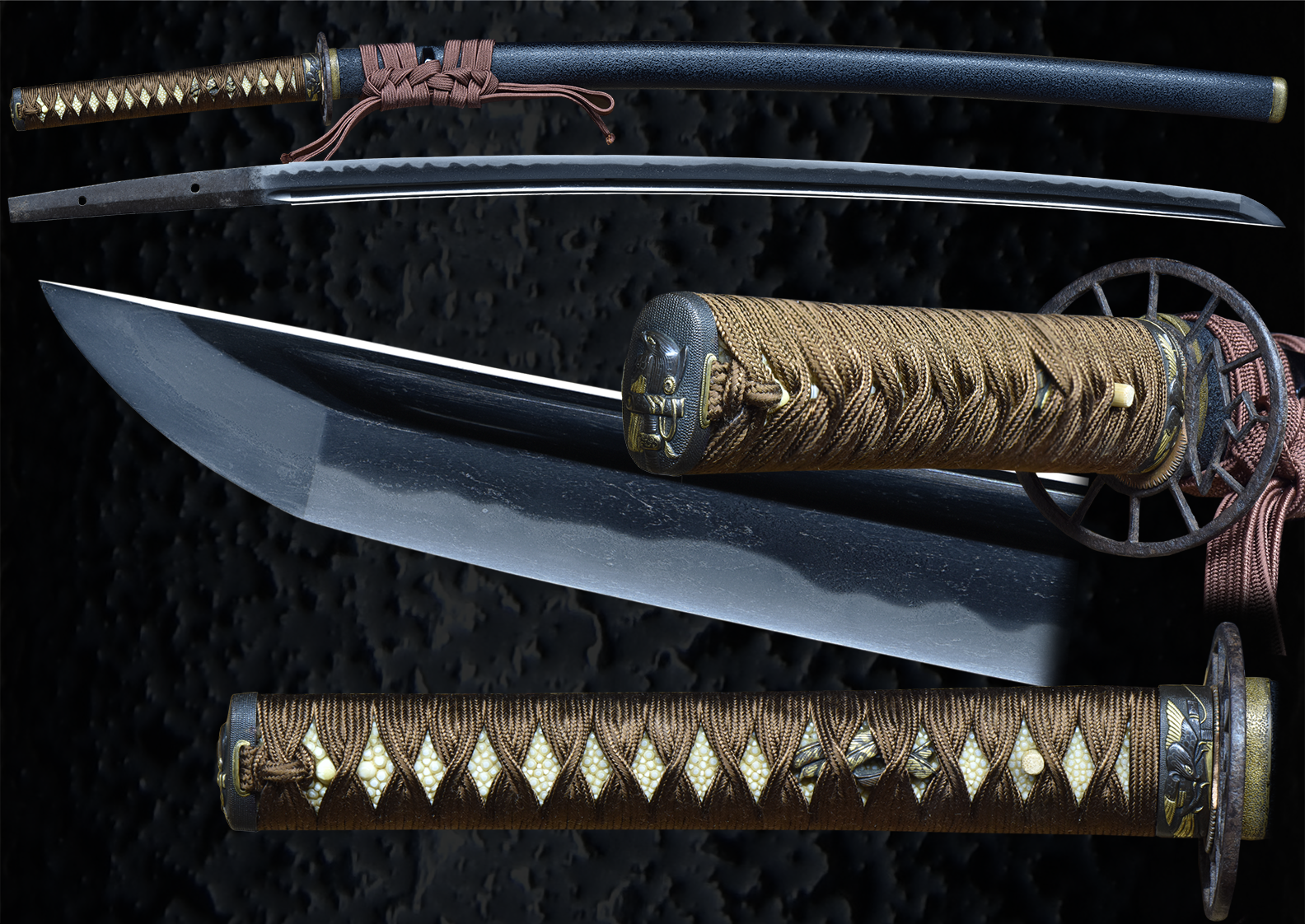
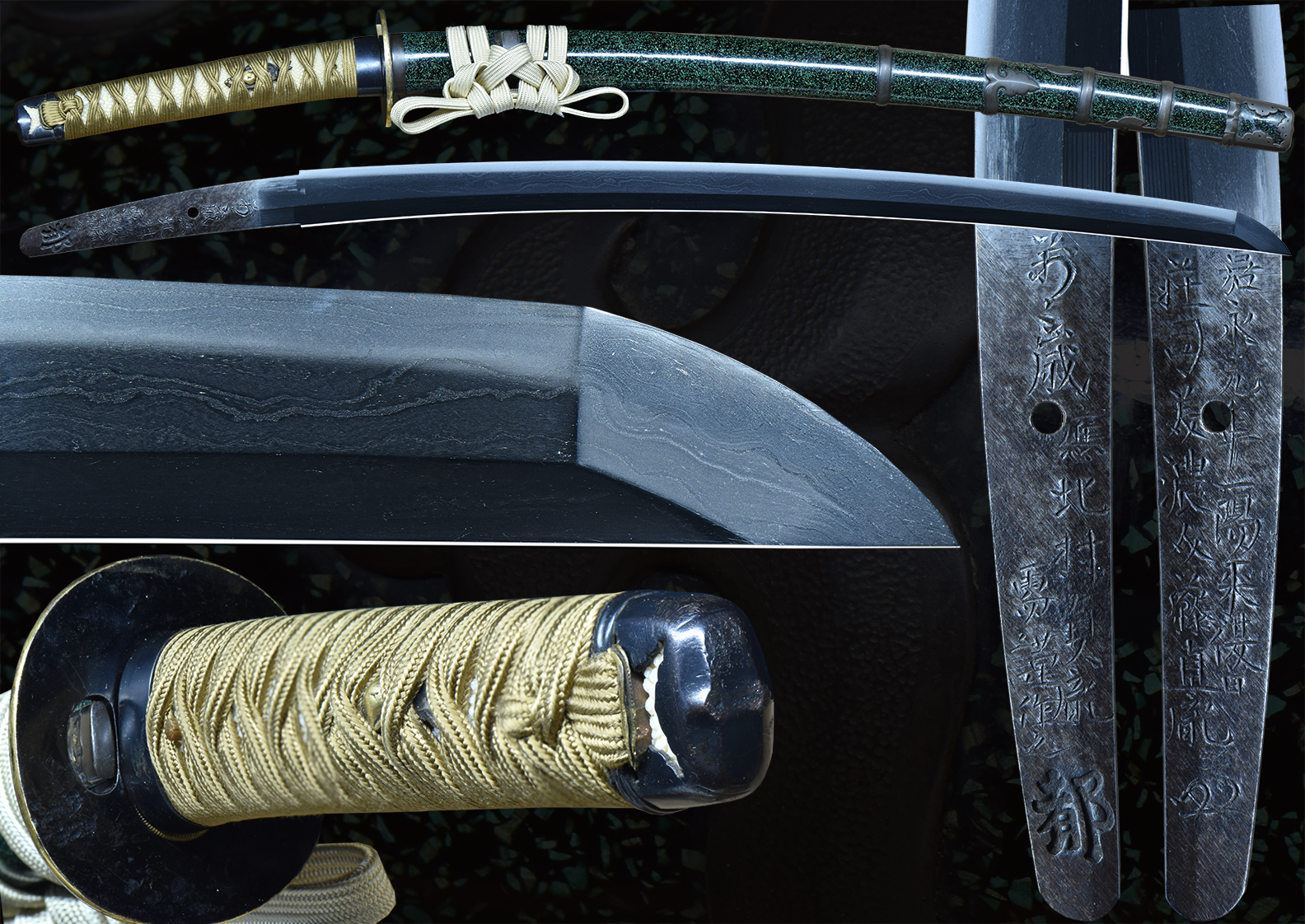
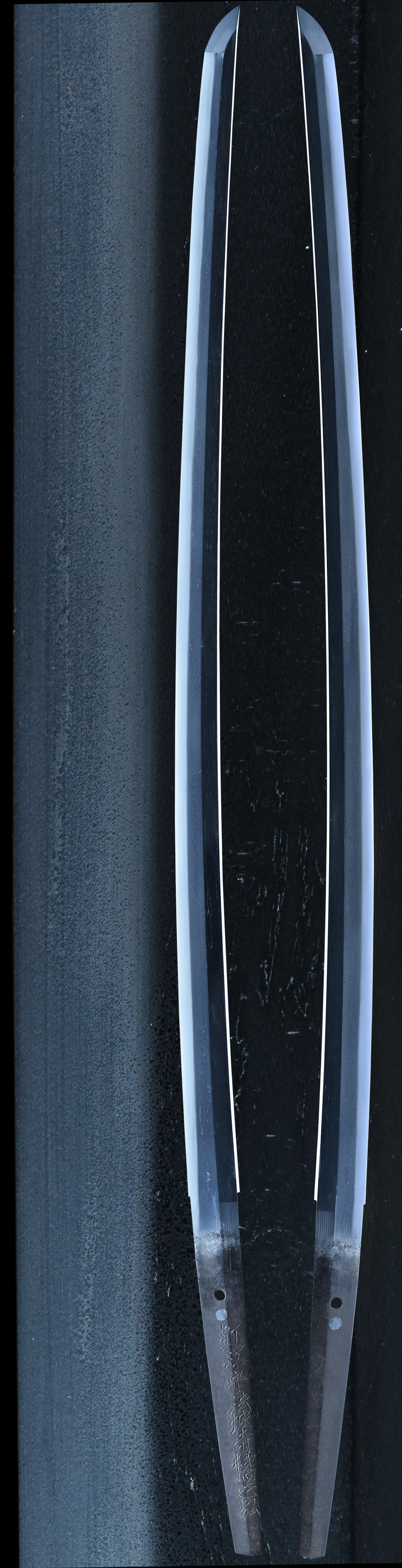
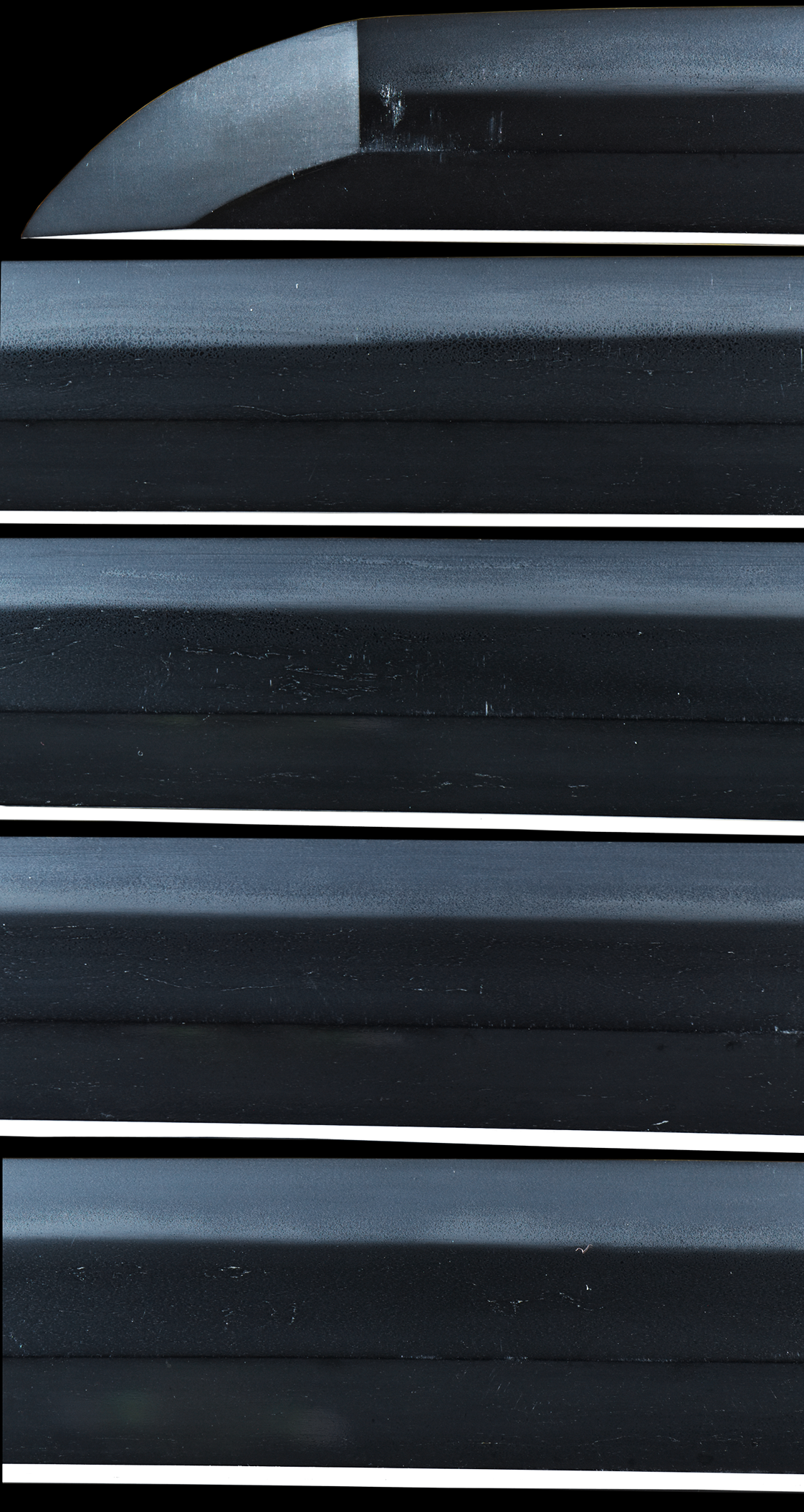
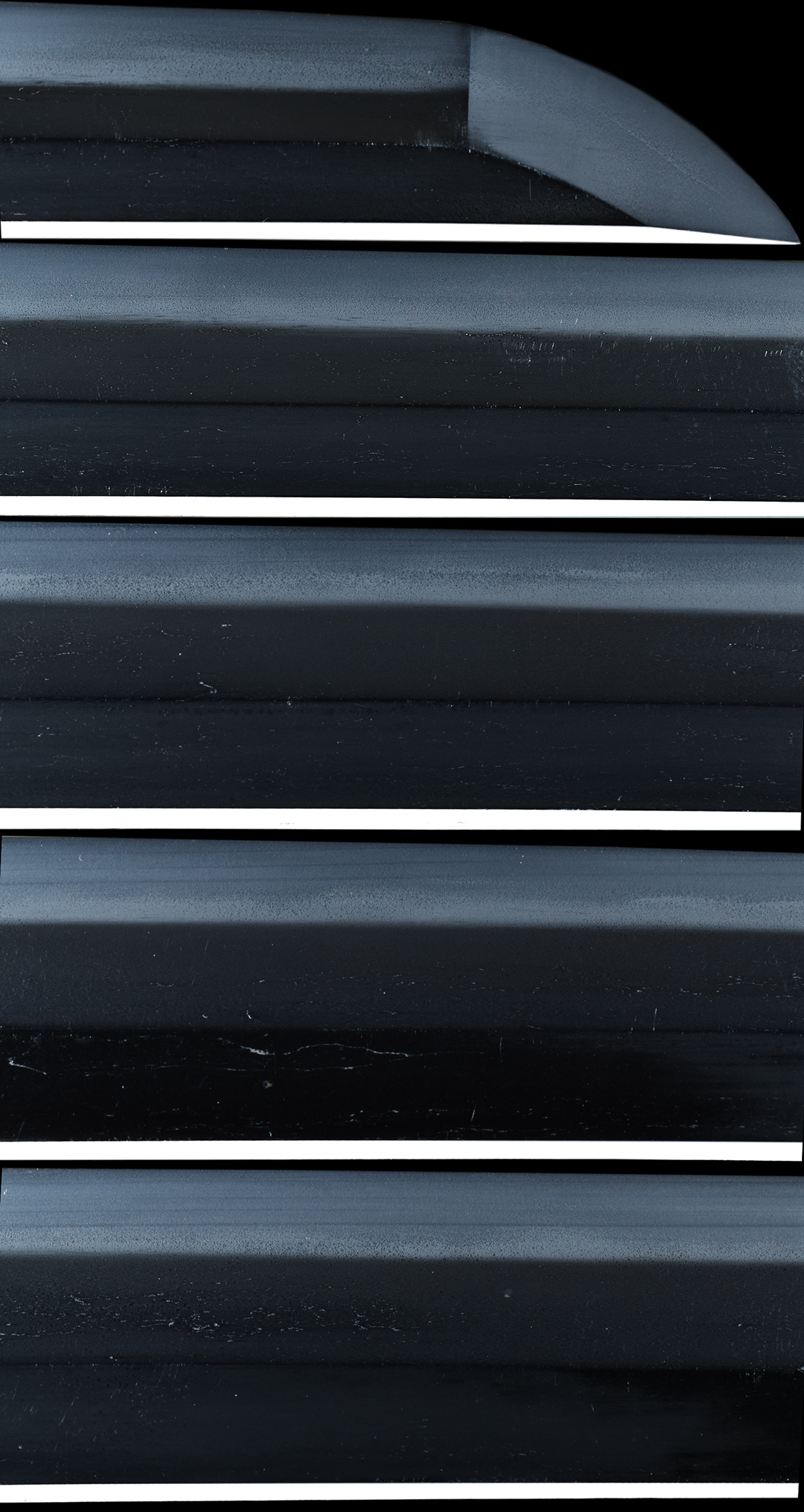
This sword is forged in classic Kanbun-shintō sugata, with a slightly compact form, shallow curvature, and a well-proportioned chū-kissaki. The jihada is a very fine ko-itame, tightly forged with a smooth, refined surface and a subtle steel texture. The hamon is a dignified suguha based pattern in ko-nie, accented by gentle undulations and a soft sprinkling of fine activities such as kinsuji and sunagashi visible in good light.
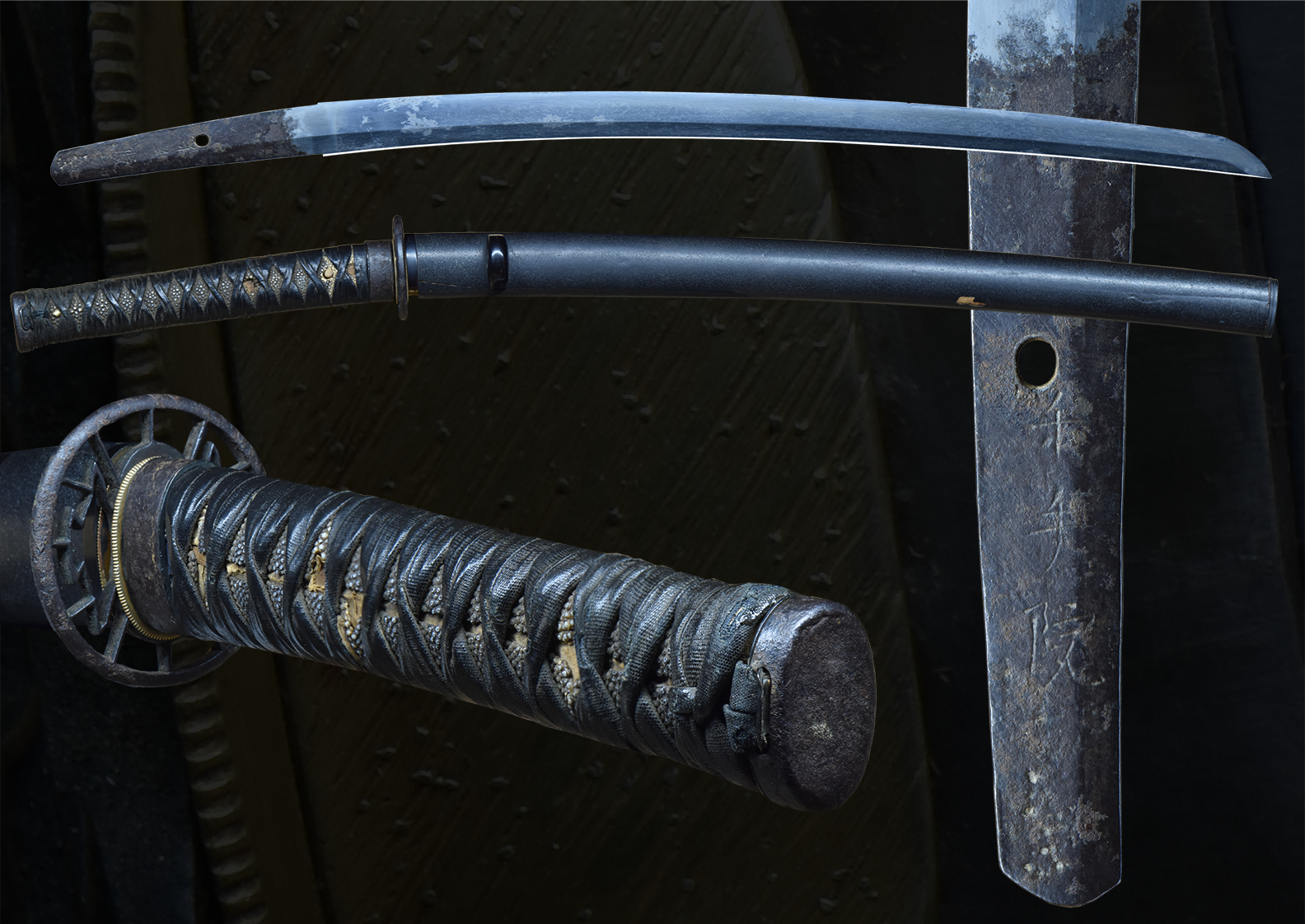
The overall workmanship is clean and elegant, showing the quiet strength valued by Edo-period samurai. The nakago remains ubu and is crisply signed. The mei is executed in Masahiro’s distinctive hand, with the flowing style of 橘 (Tachibana) and the long sweeping stroke of 弘 (Hiro) clearly evident.
The Koshirae
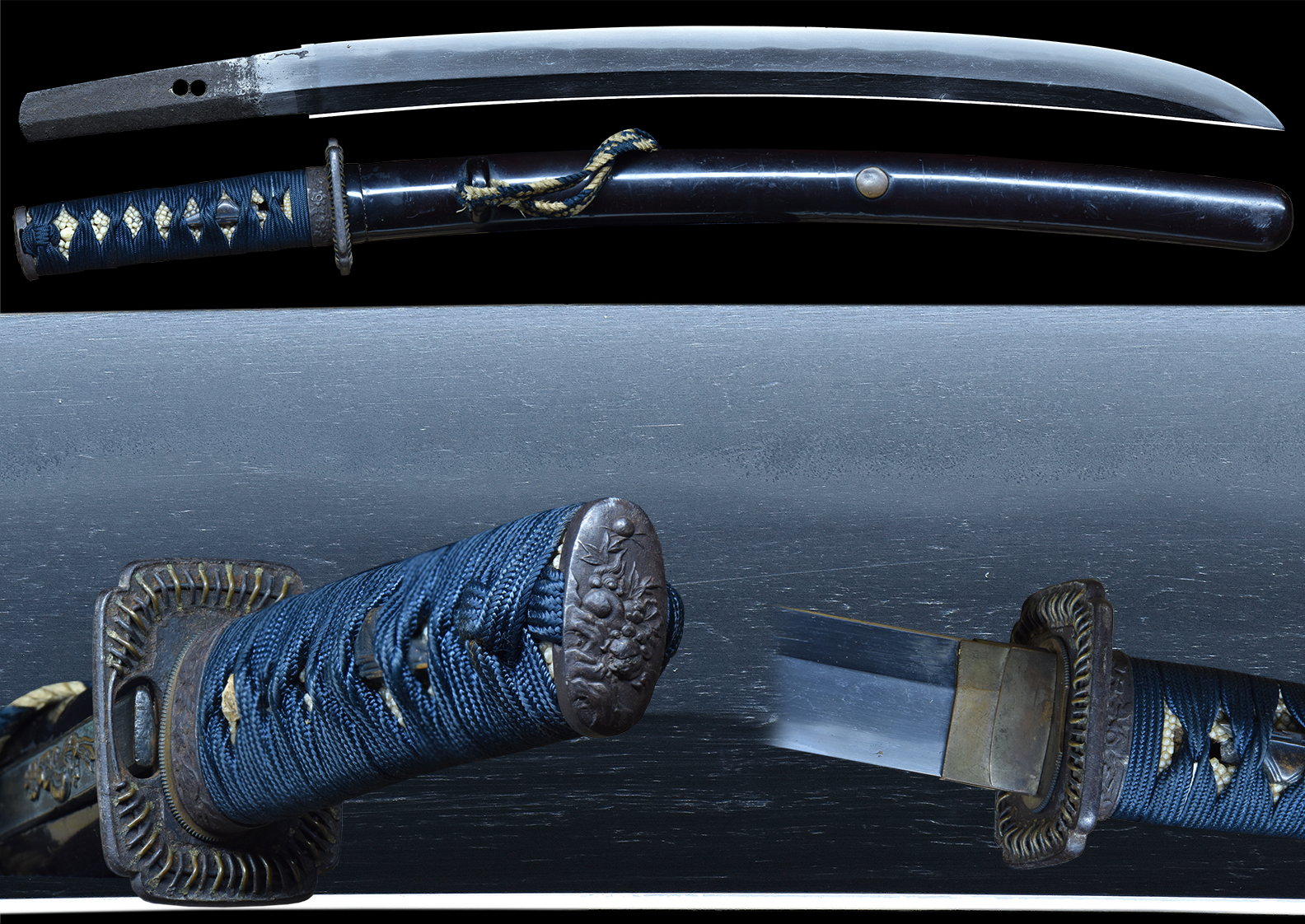
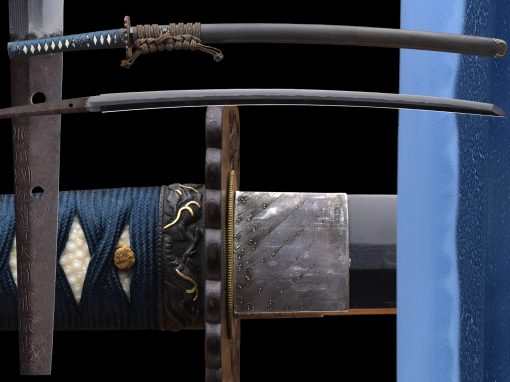
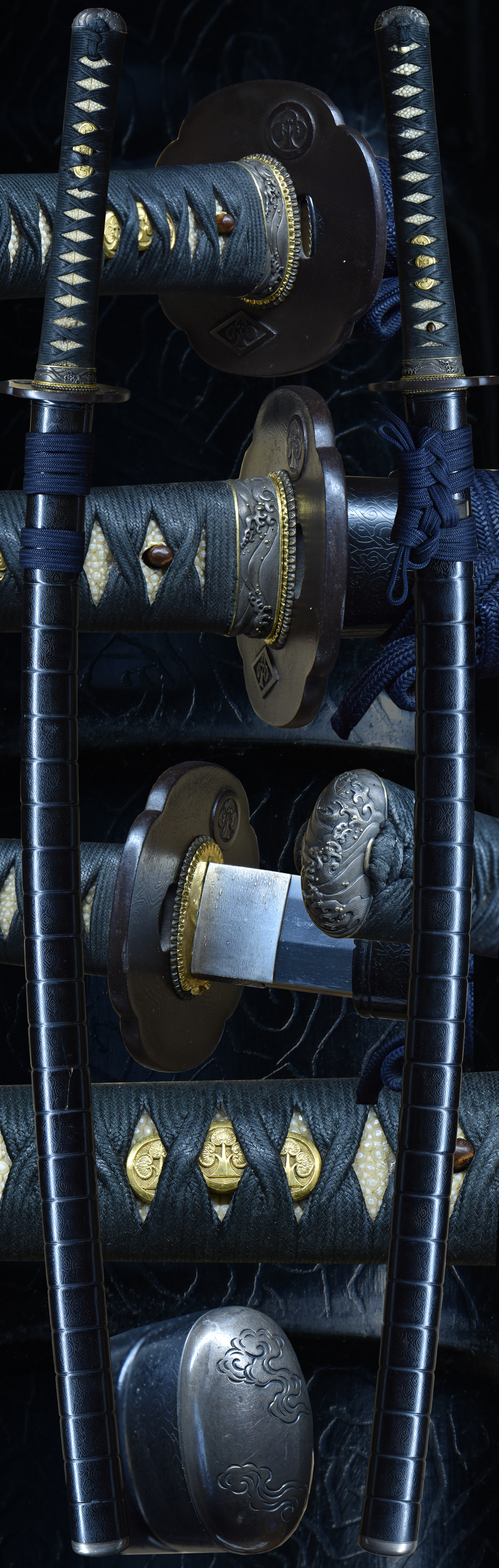
The katana is mounted in a complete and refined Edo-period koshirae of cohesive taste:
-
Tsuba: Tsuba by Tachibana Takaie (Morioka)
A signed iron tsuba by Tachibana Takaie of Morioka (Nanbu domain). Forged with a striking mokume-hada surface and decorated with bold kiri-mon crests, symbols of authority tied to Toyotomi and the Imperial house. Regional signed fittings of this quality are rare, making it an excellent piece for collectors of late Edo craftsmanship. description here -
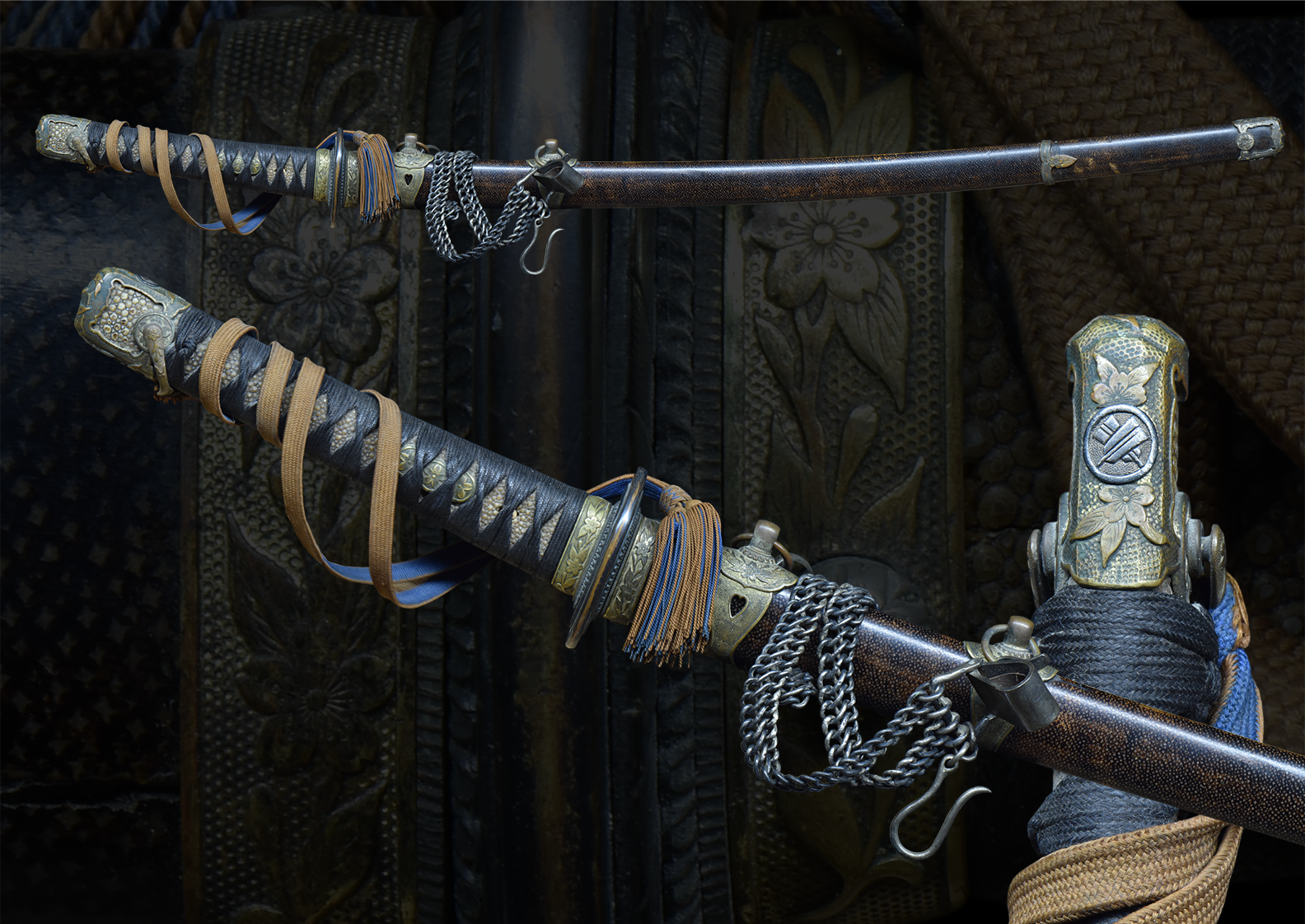
Fuchi-kashira: The fuchi is signed by Yokono Naonobu, a late Edo-period kinkō artist. His inscription praises the quality of his own carving (極の彫 – “exquisite carving”) and confirms it was engraved by his hand. Naonobu is recognized for refined detail and precision, and this fitting reflects the artistry of Edo’s skilled metalworkers. The kashira complements the fuchi with elegant cloud designs.
-
Menuki: Large gilt menuki of classical form, well mounted beneath a tight black silk tsuka-maki over quality samegawa.
-
Saya: A ribbed black lacquer saya, durable and stylish, providing a strong samurai presence.
Together, the mounts create a koshirae of balance and dignity — martial yet refined, in keeping with the character of the blade.
The Smith
Ōmi no Kami Hōjōji Tachibana Masahiro represents the best of the Hōjōji line in Edo. Rated jō-saku (superior made)in Fujishiro, his blades are admired for their precise forging, healthy steel, and classical suguha workmanship. His works survive in both katana and wakizashi forms and remain sought after for their blend of technical quality and historical prestige.
Papers
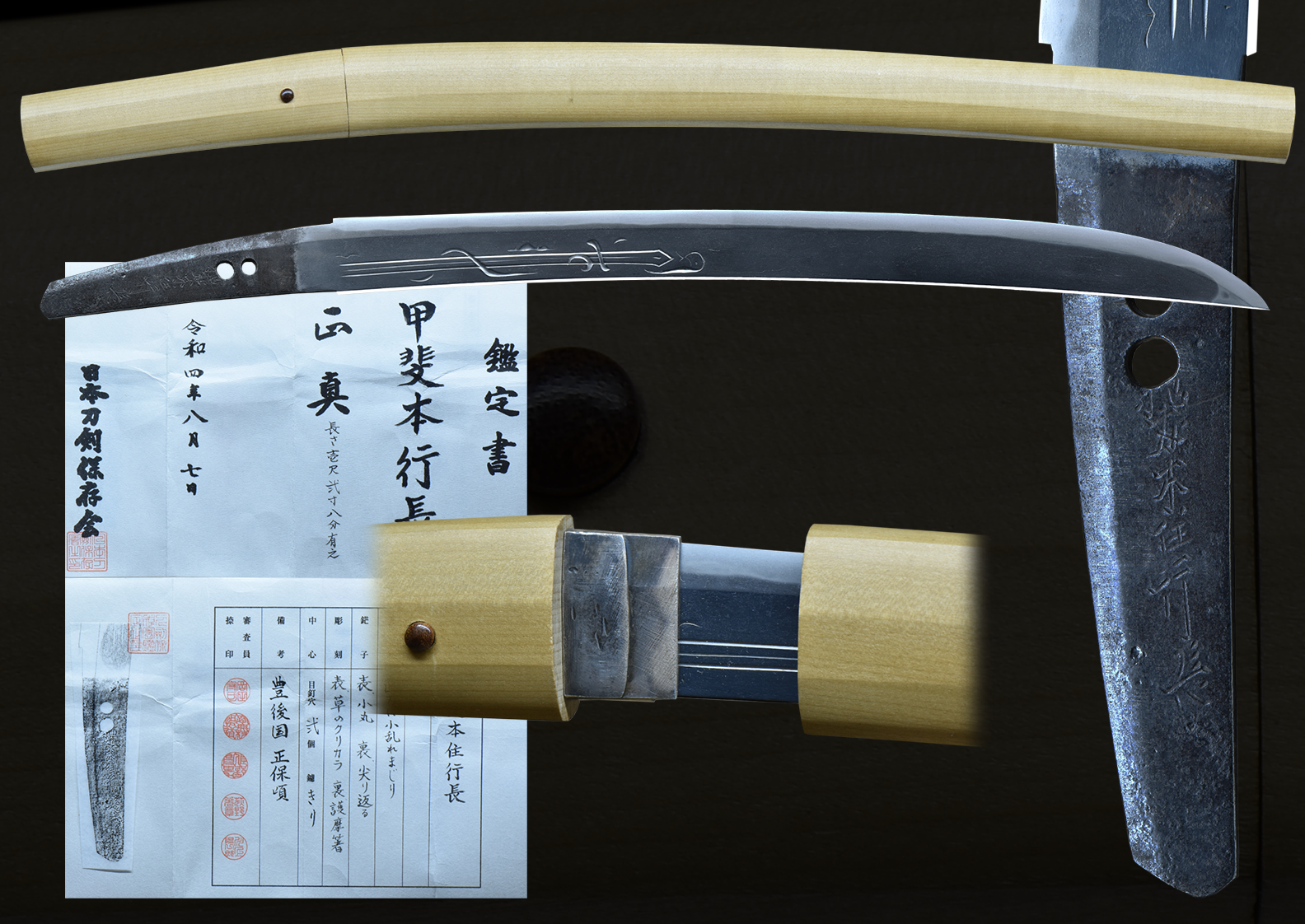
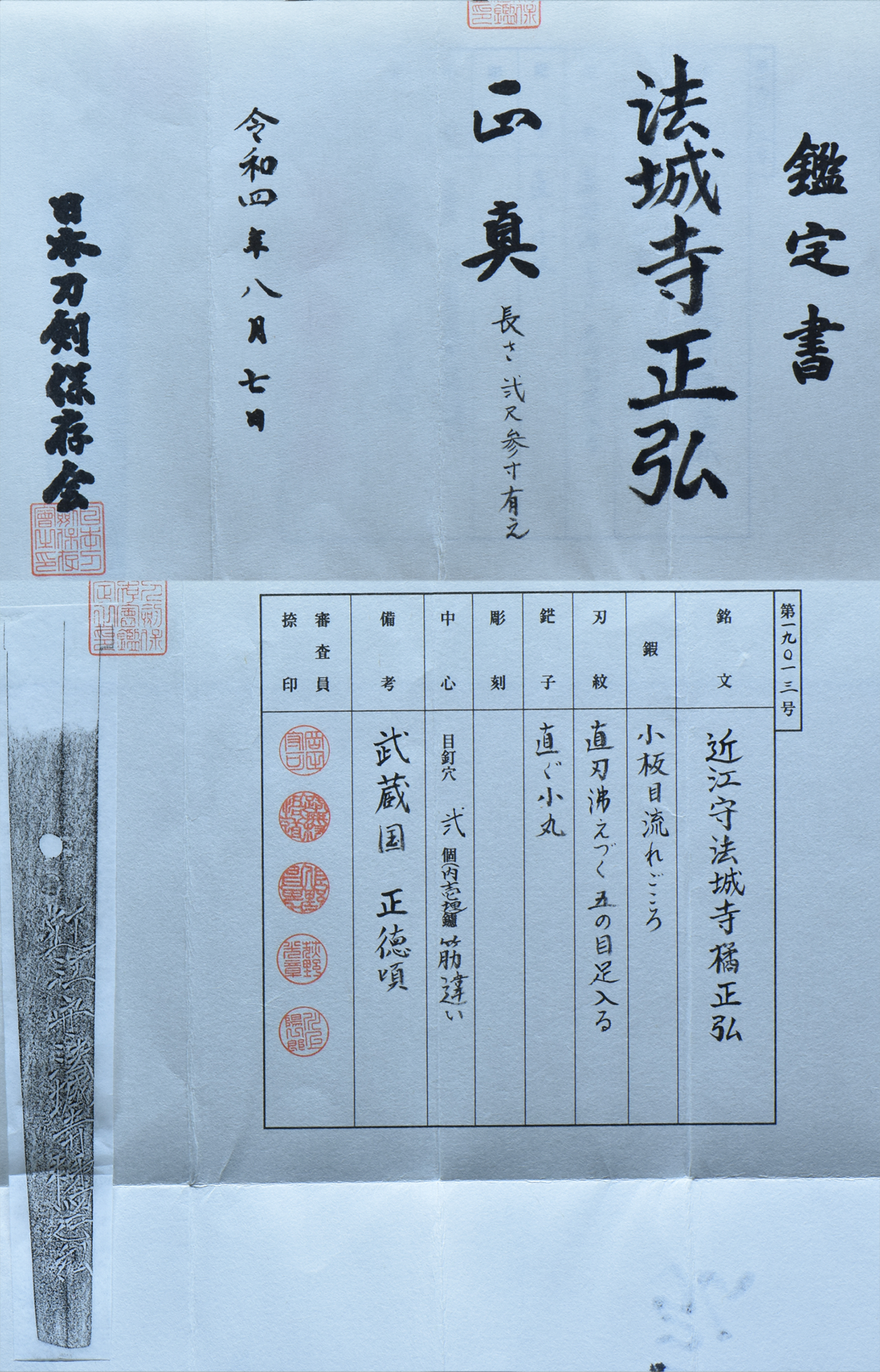
This katana is accompanied by NTHK Kanteisho, attesting to the authenticity of the signature.
- Mei: Mumei
- Date: Kanbun era (寛文, 1661–1673)
- Nagasa: 27-3/8 inches
- Sori: 10.0 mm
- Width at the ha-machi: 29.6 mm
- Width at the yokote: 19.6 mm
- Thickness at the mune-machi: 7.0 mm
- Construction: Shinogi zukuri
- Mune: Iori
- Nakago: Ubu
- Kitae: Itame/mokume
- Hamon: Sugu-ha
- Boshi: Maru
- Condition: Good polish
Click to Enlarge Image
Click to Enlarge Image
(shipping and insurance included)
Email us if your interested in this item and remember to include the order number for this item: fss-972.
Click to Enlarge Image

Click to Enlarge Image
Click to Enlarge Image
For Sale